
A Complete System, Not a Single-Focus Practice
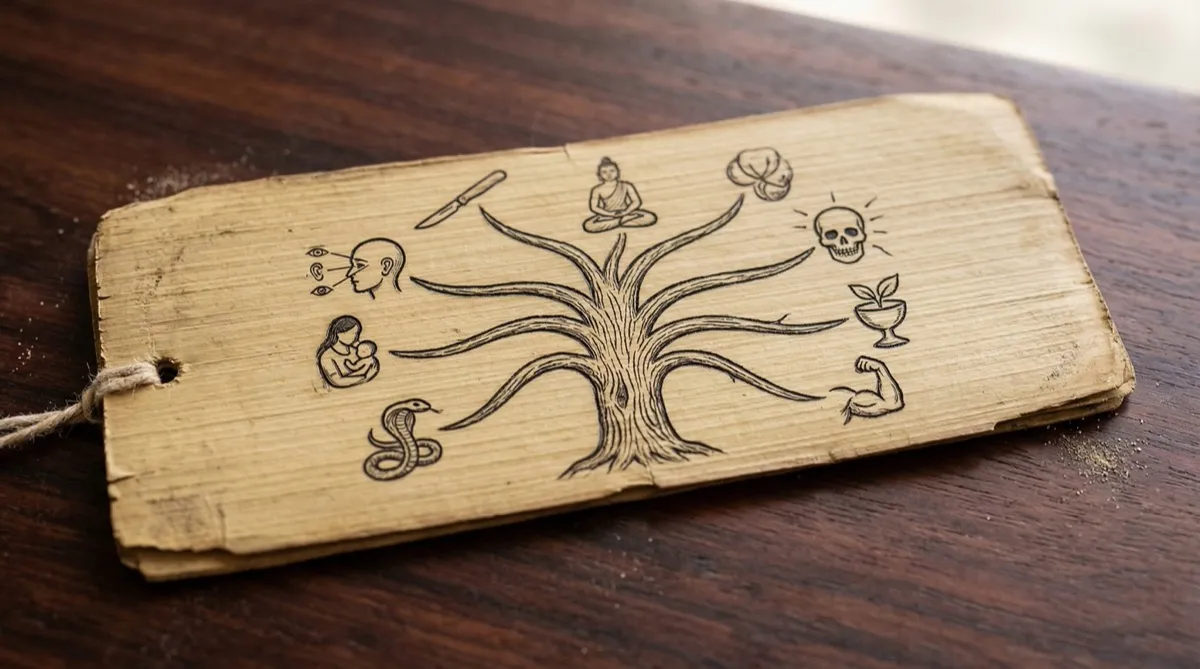
Walk into any modern hospital and you will find separate floors for cardiology, orthopaedics, psychiatry, paediatrics, and surgery. Each department has its own specialists, its own language, its own waiting room. You might assume this kind of organised medical specialisation is a modern invention. It is not. Over two thousand years ago, Ayurvedic physicians had already divided their knowledge into eight distinct branches — Ashtanga — covering everything from internal medicine to surgery, from toxicology to rejuvenation. The term comes from Ashta (eight) and Anga (limbs or branches), and it reflects a medical system that understood the human being as a complete entity requiring different types of care at different stages and situations of life.
The Ashtanga Hridaya of Vagbhata, written around the 7th century CE, takes its very name from this eightfold structure. It synthesised the earlier works of Charaka and Sushruta into a unified reference covering all eight branches. Today, when a practitioner assesses a patient at the clinic, they draw on this comprehensive framework — understanding that a person’s concern may touch multiple branches simultaneously, and that the best guidance comes from seeing the whole picture. The five-element framework underlies all eight branches.
Did You Know?
Sushruta Samhita (Sutra Sthana, Chapter 5) describes over 300 surgical procedures and 120 surgical instruments — including scalpels, forceps, trocars, and needles — more than 2,600 years ago. Among these was a rhinoplasty technique so sophisticated that when British surgeons observed it being performed in India in the 1790s, they carried the method back to Europe, where it became the foundation of modern plastic surgery. The procedure used a forehead flap with precise measurements for blood supply — the same vascular pedicle principle that reconstructive surgeons rely on today.
1. Kayachikitsa — Internal Medicine
Kayachikitsa is the most extensive branch and the one most commonly practised at the clinic. Kaya means body (specifically, the digestive fire or Agni that sustains it), and Chikitsa means treatment. This branch addresses internal conditions through diet, formulations, and lifestyle guidance. The Charaka Samhita — the foundational text of Kayachikitsa — devotes hundreds of chapters to understanding the nature of diseases, their root causes, progression through six stages (Shat Kriyakala), and the precise selection of formulations. People commonly seek guidance at the clinic for concerns that fall under this branch: digestive issues, skin conditions, metabolic imbalances, respiratory concerns, and general wellness. The practitioner’s approach always begins with assessing Agni (digestive fire) and working outward from there. To understand how this assessment unfolds in practice, the guide to how Ayurveda works walks through the process step by step.
2. Kaumarabhritya — Mother and Child Care
This branch encompasses pregnancy care, childbirth, postnatal recovery, infant nutrition, and childhood wellness. The classical texts describe detailed guidance for each trimester of pregnancy, including specific dietary recommendations, daily routine adjustments, and formulations appropriate for each stage. The Kashyapa Samhita — a text dedicated to this branch — covers childhood diseases, growth milestones, and the Ayurvedic approach to building immunity in children. Families commonly consult the clinic about fertility-related concerns, pregnancy wellness, and childhood health matters. The Ayurvedic tradition views the health of the mother as inseparable from the health of the child.
3. Graha Chikitsa — Mind and Behaviour
Long before modern psychiatry existed, the Ayurvedic sages recognised that the mind could fall out of balance just as the body could. Graha Chikitsa addresses what the classical texts called Unmada (mental imbalance) and Apasmara (seizure disorders). The approach includes specific formulations, dietary changes, lifestyle modifications, and practices designed to calm the mind and restore Sattva (mental clarity). The Charaka Samhita (Nidana Sthana, Chapter 7) provides detailed descriptions of how mental states relate to dosha imbalance — particularly Vata aggravation. Today, people seek guidance for stress, sleep disruption, anxiety-related concerns, and mental fatigue, which the Ayurvedic tradition addresses through its understanding of the mind-body connection.
Did You Know?
Charaka Samhita (Sharira Sthana, Chapter 1) states that the mind and body are so interconnected that treating one without considering the other is incomplete medicine. Modern psychoneuroimmunology — the study of how thoughts and emotions affect the immune system — arrived at the same conclusion in the 1980s. But Charaka went further: he classified mental constitutions into 16 types (Sattva, Rajas, and Tamas subtypes) and specified different therapeutic approaches for each. Today, the field of personalised psychiatry is just beginning to recognise that mental health approaches should be tailored to individual temperament — something Ayurveda formalised over two thousand years ago.
4. Shalakya Tantra — Head, Eyes, Ears, Nose, and Throat
Shalakya Tantra focuses on conditions above the collarbone — the eyes, ears, nose, throat, and head. The Sushruta Samhita describes 72 eye diseases, 28 ear diseases, and 18 nose diseases, along with specific examination techniques and approaches. This level of specialised knowledge, documented over two thousand years ago, reveals a medical system of remarkable clinical precision. The branch includes detailed guidance on nasal therapies (Nasya), eye care practices, and approaches to conditions that modern medicine would classify under ENT and ophthalmology.
5. Shalya Tantra — Surgery
Sushruta is revered as the father of surgery — and with good reason. His text documents over 300 surgical procedures, 120 surgical instruments, and principles of wound management that include suturing techniques, cauterisation, and the use of natural materials for wound closure. The Sushruta Samhita describes rhinoplasty (nose reconstruction), cataract surgery, and the removal of foreign bodies with a level of detail that astonished European surgeons when they first encountered the text. While the clinic does not perform surgical procedures, understanding this branch provides important context: Ayurveda was never just herbs and diet. It was a complete medical system that included sophisticated physical interventions when needed.
6. Agada Tantra — Toxicology
Agada Tantra deals with toxins, poisons, and purification. The classical texts classify toxins into natural poisons (from snakes, insects, plants), artificial poisons (prepared substances), and environmental toxicity. This branch includes detailed knowledge of antidotes, purification protocols, and methods for identifying poisoning. In the modern context, the principles of Agada Tantra relate to the Ayurvedic understanding of how accumulated toxins (Ama) in the body contribute to disease. The concept of Shodhana (purification) — which is central to how medicines are prepared at the clinic — draws directly from this branch’s understanding of how impurities are removed and substances are made safe for therapeutic use. The prescription guide explains more about how this preparation process shapes what patients receive.
Did You Know?
Sushruta Samhita (Kalpa Sthana, Chapters 1–8) identifies 760 plants, minerals, and animal-derived substances, and classifies each poison by source, onset speed, and the specific tissue it targets first. He described the concept of dose-dependent toxicity — that the same substance can be a medicine in one quantity and a poison in another — more than two millennia before Paracelsus articulated the same idea in 16th-century Europe. This principle is why every formulation at the clinic goes through a precise Shodhana (purification) process: the ancient toxicologists understood that safety is not about avoiding potent substances, but about knowing exactly how to prepare them.
7. Rasayana — Rejuvenation
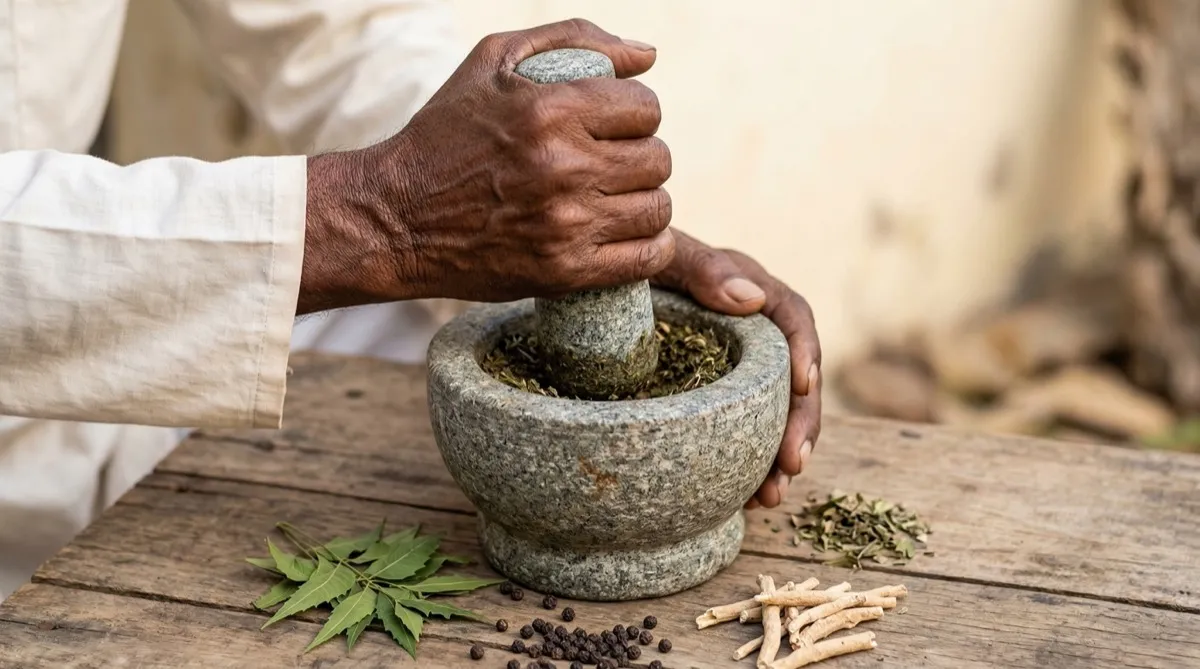
Rasayana is the science of tissue nourishment, longevity, and restoring vitality. The word comes from Rasa (essence) and Ayana (path) — the path of nourishment. This branch focuses on strengthening the body’s tissues (Dhatus), building Ojas (the finest essence of immunity and vitality), and supporting the body’s natural capacity for renewal. The Charaka Samhita (Chikitsa Sthana, Chapters 1–4) describes Rasayana as the means by which a person maintains youthful energy, strong immunity, and mental clarity. Rasayana formulations are not quick fixes — they work by deeply nourishing tissues over time. This is one of the branches most commonly drawn upon in long-term Ayurvedic care. Learn more about the Rasayana tradition.
8. Vajikarana — Reproductive Wellness
Vajikarana addresses reproductive health, fertility, and the creation of healthy progeny. The classical texts devote significant attention to this branch because the Ayurvedic tradition views reproduction as sacred — the continuation of life itself. Vajikarana formulations are designed to nourish Shukra Dhatu (reproductive tissue), which the tradition considers the most refined of all seven tissues. Families commonly seek guidance at the clinic for fertility-related concerns, and the practitioner draws on this branch’s deep understanding of how diet, lifestyle, stress, and constitutional balance all affect reproductive wellness. Explore Ayurvedic perspectives on fertility.
How the Branches Interconnect
In clinical practice, the eight branches are not isolated departments. A person seeking guidance for a skin condition (Kayachikitsa) may also need dietary changes informed by seasonal awareness (drawing on Rasayana principles) and stress management (Graha Chikitsa). A couple seeking fertility guidance (Vajikarana) will also receive Rasayana support and Kayachikitsa-based digestive optimisation. This interconnected approach is what makes Ayurveda fundamentally holistic — not because it ignores specialisation, but because it recognises that the branches work together in every patient.
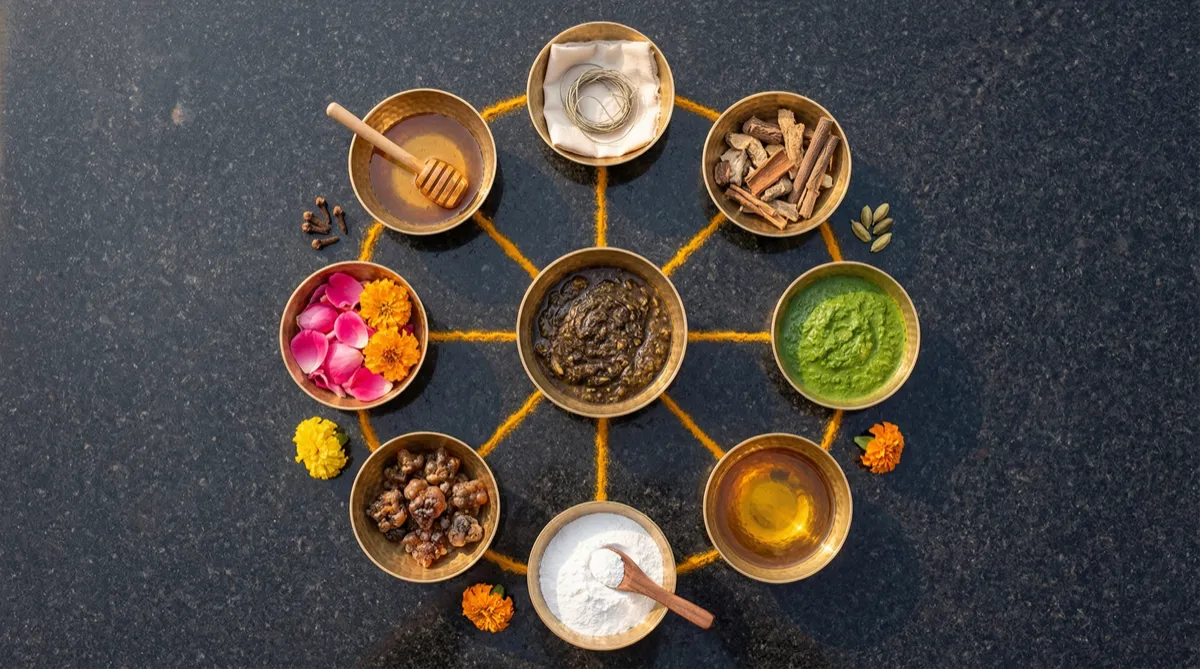
There is a deeper reason the branches work as a unified system rather than isolated specialties. The Ayurvedic sages understood the human body not as a collection of independent organs but as an energy system organised along the spine. The spine is not just structural support — it is the central channel through which Prana (life force) flows to every organ, tissue, and system. This is why a disturbance in one branch often manifests in another: a digestive problem (Kayachikitsa) creates toxins that affect the mind (Graha Chikitsa), weaken reproductive tissue (Vajikarana), and accelerate aging (requiring Rasayana). The branches are not eight different departments. They are eight different windows into one interconnected human being — and what you see through each window depends on where the central energy flow has been disrupted.
Traditional Perspective
The Ashtanga framework reveals something profound about the Ayurvedic sages: they understood that comprehensive healthcare requires organised specialisation. The fact that they documented distinct branches for surgery, toxicology, mental health, paediatrics, and rejuvenation — thousands of years before these became separate modern disciplines — speaks to the depth and sophistication of this tradition. At the clinic, this comprehensive heritage informs how the practitioner approaches every consultation: not as a narrow specialist, but as someone trained in a system that sees the whole person.
What Current Evidence Says
The World Health Organisation (WHO) has recognised Ayurveda as a traditional system of medicine, and India’s Ministry of Ayush continues to develop evidence-based frameworks for Ayurvedic practice. Research published in the Journal of Ethnopharmacology, the Journal of Ayurveda and Integrative Medicine, and other peer-reviewed journals has explored formulations from multiple Ashtanga branches. Rasayana formulations in particular have been the subject of significant research, with studies examining their effects on immune function, antioxidant activity, and tissue nourishment. The Central Council for Research in Ayurvedic Sciences (CCRAS) conducts clinical trials across multiple branches of Ayurvedic practice.
This article is for educational purposes. It describes the traditional structure of Ayurvedic medicine and is not a recommendation for any specific treatment. All guidance should come through individual consultation with a qualified practitioner. Always inform your healthcare providers about any Ayurvedic care you are receiving.